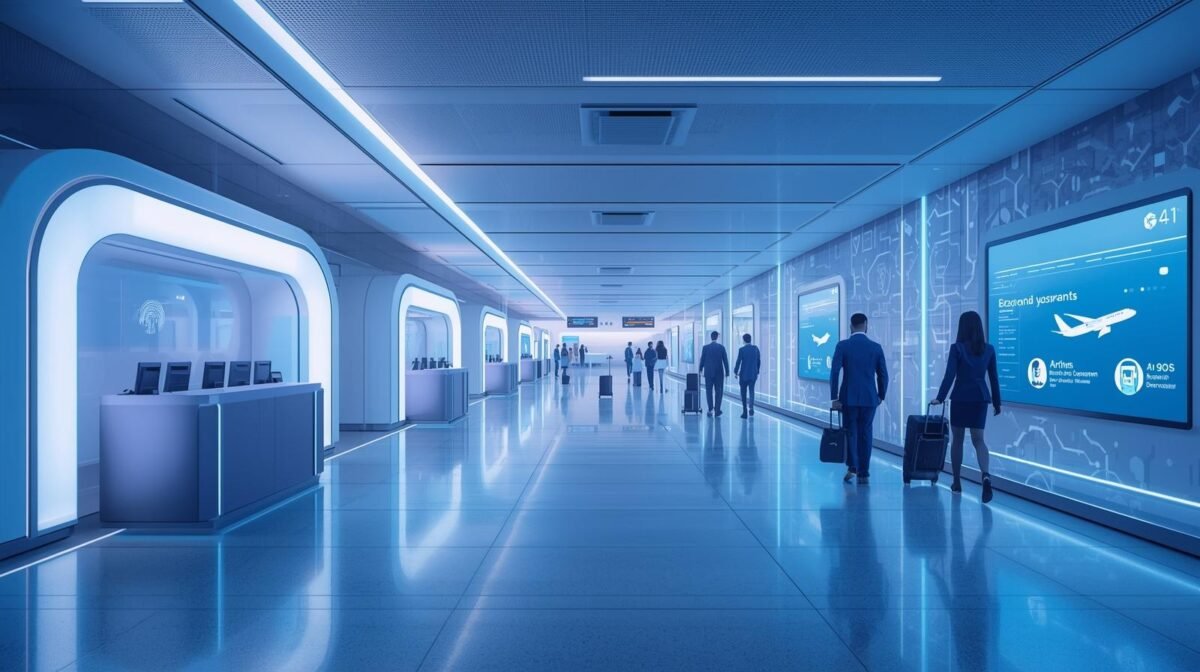
Artificial intelligence is playing a transformative role in the aviation sector, changing how people interact with airlines at every stage of their journey, from booking tickets to picking up luggage. The latest AI trends go well beyond basic chatbots and self-service kiosks, introducing a complete overhaul of air travel that focuses on personalization, increased efficiency, and smoother passenger experiences. For airline leaders and airport managers steering digital transformation projects, staying informed about these AI advancements is crucial for effective strategic planning and investing in technologies that set their services apart while minimizing operational challenges.
Predictive Personalization and Intelligent Journey Planning
Machine learning algorithms now analyze vast datasets encompassing passenger history, preferences, behavioral patterns, and contextual factors to deliver individualized travel recommendations at unprecedented scale. Advanced recommendation engines process information from previous bookings, seat selections, loyalty program interactions, and ancillary purchases, creating comprehensive passenger profiles that enable true personalization.
Leading airlines deploy AI systems that recognize patterns invisible to human analysts, identifying correlations between passenger demographics, travel purposes, and service preferences. A business traveler who consistently books morning flights receives proactive notifications about similar options before completing searches, while families see recommendations optimized for connection times and child-friendly amenities. This predictive capability extends beyond flight selection to encompass hotel partnerships, ground transportation, and destination activities.
Dynamic pricing algorithms powered by AI continuously adjust offerings based on real-time demand signals, competitive positioning, and individual willingness to pay. These systems analyze historical booking data and search patterns to identify optimal pricing strategies for different passenger segments, enabling microsegmentation at scales previously impossible. Context-aware recommendations factor external variables like weather disruptions or local events into planning suggestions, proactively offering alternate routing when detecting potential delays. This anticipatory service delivery demonstrates how AI and the passenger experience revolution transforms reactive customer service into proactive traveler advocacy.
Biometric Authentication and Frictionless Airport Journeys
Biometric authentication technologies represent among the most visible AI passenger experience trends, with facial recognition, fingerprint scanning, and iris detection increasingly replacing traditional document checks throughout the airport journey. These systems leverage computer vision and neural networks to verify passenger identities in seconds, dramatically reducing queue times while enhancing security accuracy. Some international aviation hubs have deployed comprehensive biometric corridors where passengers proceed from check-in through boarding without presenting physical documents.
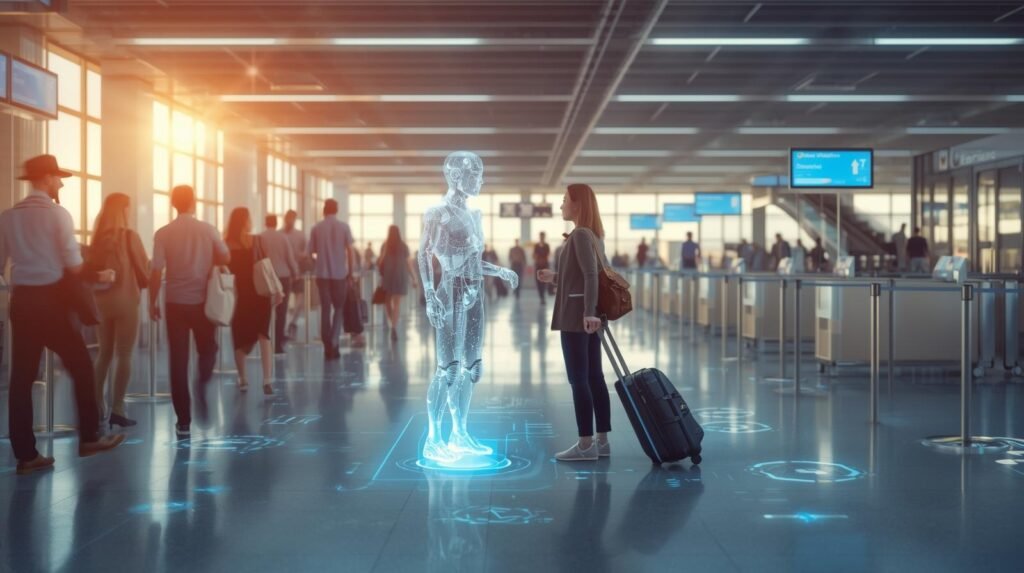
Modern facial recognition systems achieve accuracy rates exceeding 99% in controlled airport environments, surpassing human document verification performance. Machine learning models continuously improve through exposure to diverse passenger populations, learning to account for variations in lighting conditions, facial accessories, and aging effects. Leading implementations adopt privacy-by-design principles where biometric templates are encrypted, stored locally, and automatically deleted after journey completion.
The expansion beyond airport environments represents the next frontier, where airlines explore biometric applications in lounge access, duty-free purchases, and personalized cabin service. Flight attendants receive notifications of passenger preferences and special occasions through tablet interfaces that identify travelers biometrically, exemplifying how comprehensive personalization, biometrics, and seamless journeys converge to create differentiated experiences.
Conversational AI and Intelligent Virtual Assistants
Natural language processing advancements have transformed customer service, where virtual assistants now handle complex, multi-turn conversations previously requiring human agents. Modern AI chatbots understand context, sentiment, and intent with remarkable sophistication, addressing booking modifications, baggage inquiries, and travel disruption assistance through conversational interfaces that feel increasingly natural. These systems operate continuously across mobile apps, websites, social media platforms, and messaging services.
Contemporary AI assistants employ large language models trained on millions of customer service interactions, learning to interpret ambiguous requests and handle unexpected scenarios. This contextual understanding enables virtual assistants to resolve approximately 70-80% of routine inquiries without human intervention, freeing customer service teams for complex situations requiring empathy and creative problem-solving.
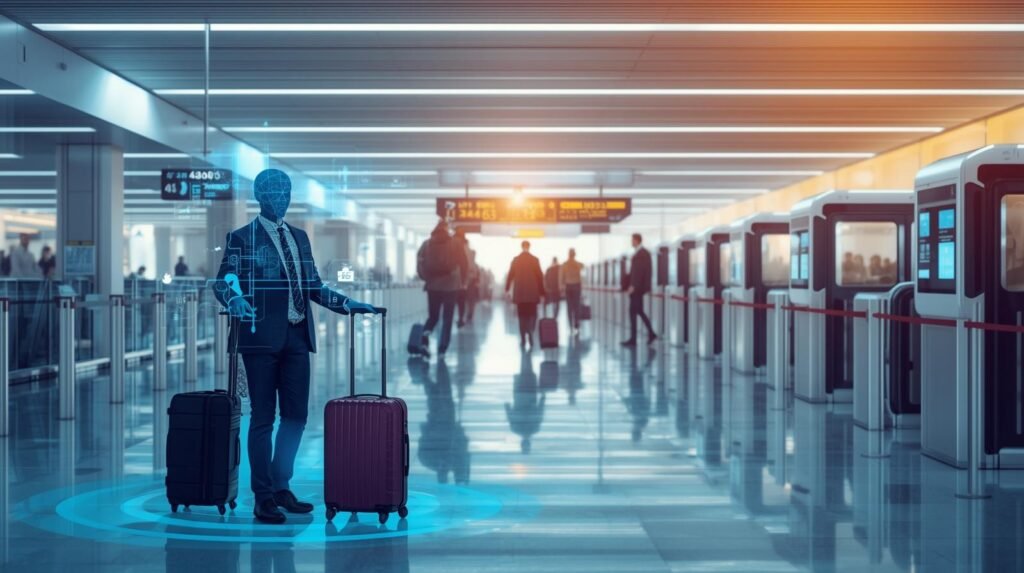
Multilingual capabilities represent another significant advantage, where neural machine translation enables airlines to support passengers in dozens of languages without maintaining corresponding human agent teams. Voice-activated assistance extends conversational AI into new modalities, with voice-enabled kiosks guiding passengers through check-in processes or rebooking disrupted flights through natural speech. The hands-free convenience proves especially valuable for passengers managing luggage, traveling with children, or requiring accessibility accommodations.
Predictive Operations and Proactive Disruption Management
Behind-the-scenes AI systems revolutionize operational efficiency through predictive analytics that anticipate disruptions before they impact passengers. Machine learning models analyze historical performance data, weather patterns, air traffic conditions, and crew availability to forecast operational challenges hours or days in advance, enabling airlines to implement mitigation strategies proactively. This predictive capability transforms disruption management from reactive scrambling to orchestrated contingency planning.
Flight delay prediction models process hundreds of variables to estimate departure times with greater accuracy than traditional systems, informing passenger notifications, rebooking recommendations, and resource reallocation decisions. When algorithms detect high probability of delays, systems automatically generate rebooking options for connecting passengers and adjust gate assignments to optimize airport flow, all before delays officially materialize.
AI-powered baggage handling systems with computer vision track bags throughout their journey, detecting routing errors and predicting potential delays based on connection times. Airlines deploying these systems report mishandled bag rates declining by 30-50% compared to traditional tracking methods, directly translating to improved passenger satisfaction and reduced costs. Crew scheduling optimization powered by AI addresses aviation’s most complex logistical challenges, balancing regulatory requirements, crew preferences, and operational efficiency while maintaining reserve capacity for irregular operations.
Personalized In-Flight Experiences and Smart Cabin Services
AI passenger experience trends extend into aircraft cabins through intelligent entertainment systems that curate content based on passenger preferences, viewing history, and contextual factors like flight duration. Modern in-flight platforms employ recommendation algorithms similar to streaming services, analyzing patterns across passenger populations to suggest movies, television shows, and music aligned to individual tastes.
Dynamic content loading represents an operational innovation where AI systems predict which entertainment options will prove popular on specific flights, pre-loading content to optimize bandwidth utilization and streaming quality. Connectivity personalization enables airlines to offer targeted internet packages based on predicted usage patterns and willingness to pay, with dynamic pricing adjusting offers in real-time based on network capacity and demand.
In-flight retail experiences benefit from AI-powered personalization where systems recommend duty-free products, food options, and ancillary services based on passenger preferences and purchase history. Cabin crew equipped with AI-powered tablets receive real-time passenger insights enabling personalized service delivery at scale—learning about celebration occasions, dietary restrictions, and service history before flights begin. This crew empowerment through technology exemplifies how AI-driven personalization creates value for passengers and airlines simultaneously.
Strategic Implementation for Aviation Leaders
Successful deployment of AI passenger experience trends requires strategic planning addressing data infrastructure, organizational capabilities, and regulatory compliance. Airlines must establish robust data foundations where passenger information consolidates into unified profiles accessible by AI applications. Legacy IT architectures often fragment data across disparate systems, preventing the comprehensive passenger view necessary for effective personalization.
Ethical frameworks governing AI deployment ensure technologies enhance experiences while respecting privacy and avoiding discriminatory outcomes. Airlines must establish governance processes evaluating AI applications for potential bias, ensuring transparency in algorithmic decision-making, and providing clear accountability when systems produce problematic outcomes. Responsible AI practices include regular audits of model performance across demographic groups and accessible mechanisms for passengers to challenge algorithmic decisions.
Talent development initiatives prepare aviation workforces for AI-augmented operations, where human roles evolve to focus on complex problem-solving and empathy-driven service rather than routine transactions. Change management processes address workforce concerns about automation while emphasizing how AI systems augment human capabilities rather than replacing workers.
Conclusion
AI passenger experience trends represent fundamental transformation in how airlines engage with travelers throughout their journeys. From predictive personalization in booking to biometric authentication at airports, from conversational assistants to proactive disruption management, artificial intelligence touches every aspect of modern air travel. Airlines that strategically implement these technologies position themselves as innovation leaders while delivering experiences meeting rising passenger expectations.
The strategic imperative for aviation leaders centers on balancing innovation with responsible deployment, investing in AI capabilities that deliver measurable satisfaction improvements and operational efficiencies while maintaining robust governance frameworks. Airlines approaching AI transformation systematically, with clear roadmaps, adequate resources, and realistic timelines, achieve better outcomes than organizations pursuing fragmented initiatives without strategic coherence.
As AI technologies continue evolving, airlines must maintain adaptive strategies incorporating emerging capabilities while preserving core passenger experience principles of safety, reliability, and service excellence. For aviation executives ready to explore comprehensive approaches to AI-driven transformation, understanding how personalization, biometrics, and seamless journeys converge provides essential context for strategic decisions shaping the industry’s next decade.